
The Grail
Wolfram von Eschenbach and Parzival
A Bavarian knight turned the grail into a stone fallen from heaven, guarded by knights called Templars: Parzival, masterpiece of the German Middle Ages and source of Wagner.

A few years after the death of Chrétien de Troyes, a knight from Franconia, Wolfram von Eschenbach, took up his unfinished story and completed it in German. Parzival, composed roughly between 1200 and 1210, is a poem of nearly twenty-five thousand lines in sixteen books, one of the masterpieces of medieval literature. Wolfram claims he could neither read nor write, perhaps ironically; what is certain is that he profoundly changed the meaning of the Grail.
A stone, not a cup
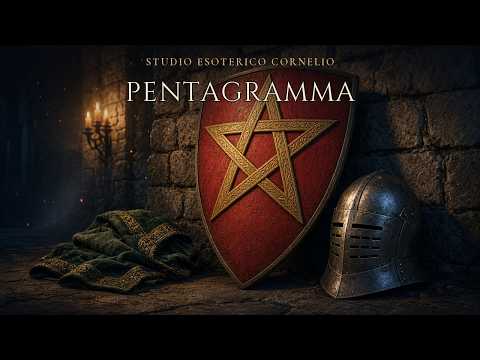
In Parzival the Grail is neither a dish nor the vessel of the Last Supper, but a precious stone. Wolfram gives it an enigmatic name, lapsit exillis, debated by scholars for two centuries: perhaps a garbling of lapis ex caelis, the stone fallen from heaven. Every Good Friday a dove comes down from heaven and lays a host upon it; the stone provides food and drink in abundance, keeps those who look at it from dying and restores their youth. Inscriptions appear on it naming those who are called to its service.
The Templars of the Grail
The stone is kept in a castle, Munsalvaesche, by a community of knights whom Wolfram calls templeise, Templars. They live chastely and fight to protect the Grail. The allusion to the Order of the Temple, then at the height of its fame, is obvious, and it has fed every modern legend linking the Templars to the Grail. In the poem, however, they are an imaginary knighthood, serving a wounded king, Anfortas.
Kyot, the mysterious source
Wolfram says he corrected Chrétien thanks to another author, Kyot the Provençal, who supposedly found the story of the Grail in an Arabic manuscript at Toledo, written by a scholar named Flegetanis who read destiny in the stars. No trace of Kyot exists, and almost all scholars regard him as a literary invention. But the game of hidden sources gave the Grail an eastern and astrological aura that would fascinate modern readers.
The question of compassion
As in Chrétien, Parzival fails the first time because he keeps silent before the king's suffering. After years of wandering, of rebellion against God and of doubt, he returns to Munsalvaesche and at last asks the question: "Uncle, what ails you?" It is no longer curiosity about the object but an act of compassion towards the man. Anfortas is healed and Parzival becomes king of the Grail. Beside him stands his half-brother Feirefiz, son of an eastern queen, his skin dappled black and white, who receives baptism: an ending open to the whole world.
From Wolfram to Wagner
From Parzival's son, Loherangrin, comes the legend of Lohengrin, the swan knight. In 1882 Richard Wagner drew his last music drama, Parsifal, from the poem. For modern audiences the stone Grail and its knights are Wolfram's: the German chapter in the story of Perceval and Parzival and of the Holy Grail.
Watch the video
Sources and further reading
- Wolfram von Eschenbach, Parzival (c. 1200-1210)
- Wolfram von Eschenbach, Parzival, trans. A. T. Hatto (1980)
- J. Bumke, Wolfram von Eschenbach (8th ed. 2004)
- R. Wagner, Parsifal (1882)
- R. S. Loomis, The Grail. From Celtic Myth to Christian Symbol (1963)
Read next

The Holy Grail: birth of a legend
From a mysterious “grail” in a twelfth-century French romance to the cup of the Last Supper: how the most sought-after object in European literature was born and transformed.
Perceval and Parzival: the knight of the question
The naive boy raised in the forest, the Grail castle and a silence that costs dearly: Perceval's story from Chrétien to Wolfram and on to Wagner's Parsifal, inspired by a garden in Ravello.
The Fisher King and the Waste Land
A wounded ruler who can only fish, a barren kingdom waiting for a question: the most enigmatic figure of the Grail cycle and its interpretations.
