The Templars
The founding of the Order of the Temple
A handful of knights in Jerusalem, a seat in the ancient Temple of Solomon, the support of Bernard of Clairvaux: how the most famous military-monastic order in history was born.
Around 1119–1120 in Jerusalem, a small group of knights led by the Frenchman Hugues de Payns pledged before the patriarch to live by the vows of poverty, chastity and obedience and to protect pilgrims on the roads of the Holy Land, which were infested with bandits. They were not monks and they were not mere warriors: they were something new, which would change the history of the Middle Ages.
The poor knights of the Temple
King Baldwin II of Jerusalem granted them part of his palace, set up in the al-Aqsa mosque on the Temple Mount, which the crusaders believed to be the Temple of Solomon. Hence the official name: the Poor Fellow-Soldiers of Christ and of the Temple of Solomon. The historian William of Tyre, writing a few decades later, says that at first there were only nine of them and that for years they lived on alms.
The Council of Troyes
The turning point came in January 1129, when a council meeting at Troyes, in Champagne, approved a rule for the new community. Behind the operation stood the most authoritative figure in the Church of the time, the Cistercian abbot Bernard of Clairvaux, a relative of one of the first Templars. Bernard also wrote a treatise, In Praise of the New Knighthood, defending a bold idea: a knight could fight and kill without sin if he did so to defend Christians, provided he lived like a monk.
The pope's privileges
In 1139 Pope Innocent II issued the bull Omne datum optimum, which made the Order independent of the bishops and answerable only to the pope. The Templars could have their own priests, churches and cemeteries, and were exempt from tithes. These privileges were the basis of their strength but also, in the long run, of the envy that surrounded them.
An international machine
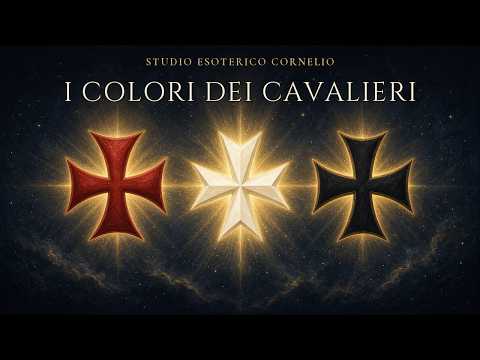
The Order had a precise structure. The knights, of noble birth, wore the white mantle; the sergeants, fighters and workers of humbler station, the dark mantle; then there were the chaplains. At the head stood the Grand Master, assisted by dignitaries such as the seneschal and the marshal. Important decisions were taken in chapter.
Keeping fighters in the East required money, horses and weapons. The Templars built across Europe a network of houses, the commanderies or preceptories, which managed estates, mills and livestock and sent the revenues overseas. They also became bankers: they kept treasure, lent money to kings, and allowed pilgrims to deposit a sum in Europe and withdraw it in the Holy Land.
The Templars in Italy
In Italy the Order settled above all along the pilgrim roads and in the ports from which ships sailed for the East, particularly in Apulia. Its traces are scattered throughout the peninsula: churches, hospices, place names. In Perugia the church of San Bevignate preserves thirteenth-century frescoes with battle scenes and crusader knights, among the most important Templar images in Europe. In Rome the Order's seat stood on the Aventine, where the villa of the Priory of Malta stands today.
From glory to defeat
The Templars fought in all the great battles of the crusades. They were decimated at Hattin in 1187, when Saladin had the captured knights executed, and held out to the last in the fortress of Acre, which fell in 1291. With the loss of the Holy Land, the Order also lost its reason for existing in the eyes of many. It was the beginning of the end.
Watch the video
Sources and further reading
- William of Tyre, History XII 7
- Latin Rule of the Council of Troyes (1129)
- Bernard of Clairvaux, In Praise of the New Knighthood
- Innocent II, bull Omne datum optimum (1139)
- M. Barber, The New Knighthood (1994)
- B. Frale, The Templars (2004)
Read next
The Rule of the Templars
What they ate, how they dressed, when they could retreat in battle: the daily life of the Templars according to the rule approved at Troyes and its statutes.
The fall of the Templars
Friday 13 October 1307: the arrests ordered by Philip the Fair, the charges, the confessions, the Chinon parchment and the burning of Jacques de Molay. The story of a trial that changed Europe.
Jacques de Molay, the last Grand Master
From Franche-Comté to Cyprus, from the arrests of 1307 to the Paris pyre of 1314: the life of the last Grand Master of the Templars and the birth of the legend of the curse.
